
EV charging solutions · by deployment site
Charging infrastructure, engineered for the site it serves.
Every product below still has the same kW rating, connector type and IP rating it always had. What changes here is the lens: instead of a spec sheet, each one is shown at the place it gets installed — a driveway, a depot, a highway stop, a forecourt, a city street — with the problem it removes for whoever runs that site.
Six deployment contexts, ordered from a single driveway to a city-wide network — each paired with the hardware and the ChargeOS platform layer that runs it.
YoY demand growth. Public charging demand in Türkiye nearly doubled in a year.
Growth in commercial charging consumption, Jul 2025 → Jul 2026¹
One manufacturer, every charging speed — home wallbox to highway fast-charger.
AC to DC, across the full Predixon hardware range
Connects to the billing and management systems already on site.
OCPP 1.6J · 2.0.1 · 2.1 — spoken by ChargeOS at every site type
Under 9 hours of unplanned downtime a year, per charger.
0.1% unplanned-downtime target for Digital Axon predictive-maintenance hardware
1. Türkiye EV Şarj Pazarı Stratejik Görünüm Raporu, EVCify Market Analytics, Temmuz 2026 — approximate market-wide figure, operator-reported, not a Predixon-specific result.
What the specifications mean once a charger is on site
The same rating plate, translated into what it changes for whoever runs the site.
- 3.7–320 kW (AC to DC) → Right-sized for the site — a driveway wallbox and a city-wide fast-charging network, from one manufacturer.
- IP54–IP65 (outdoor-rated) → Keeps running unattended through rain, heat and coastal air.
- OCPP 1.6J · 2.0.1 · 2.1 → Connects into the billing, access-control and monitoring systems already on site.
- Digital Axon (predictive maintenance) → Flags a fault before it becomes a closed charger and a lost booking.
Six sites, one platform
SITE TYPE · 01 OF 6
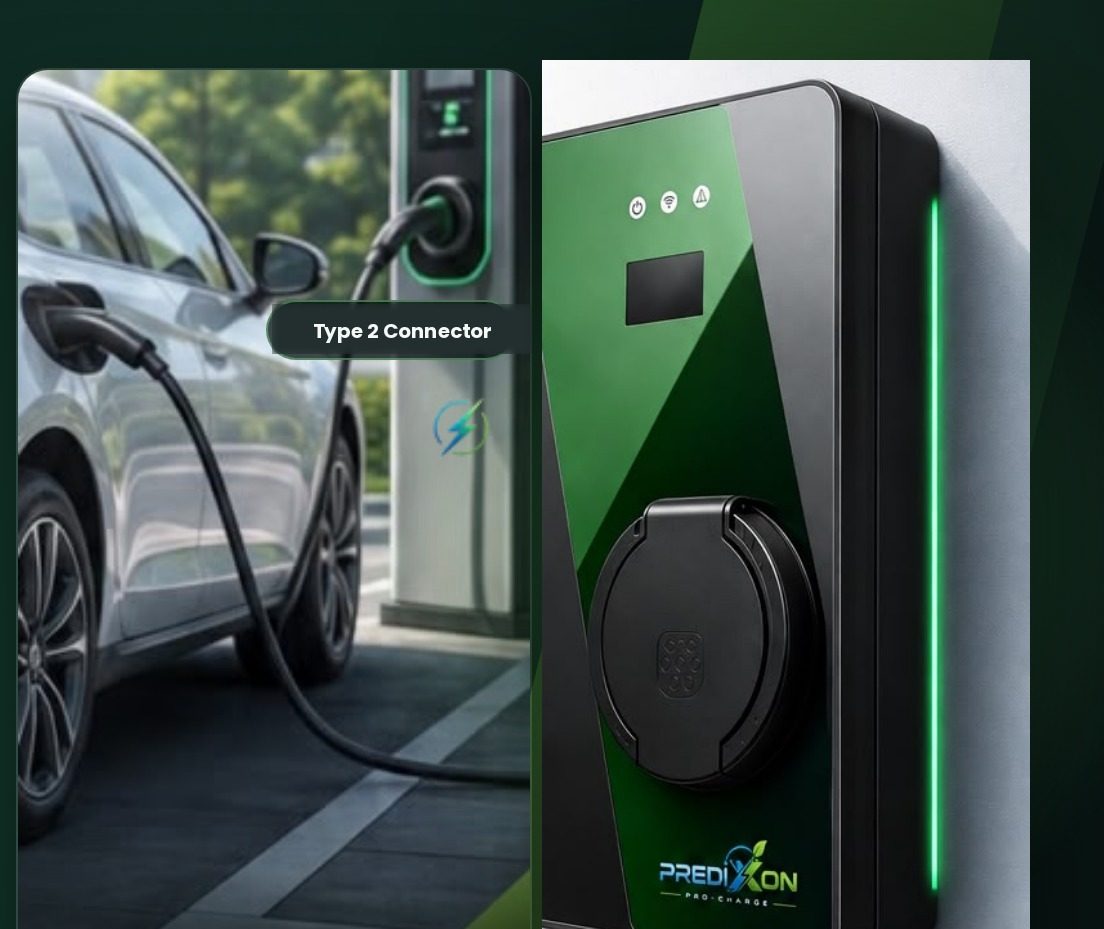
Home & Residential Charging
On site: no garage wallbox history to trust, and the nearest service call is a week away — an EV owner plugs in overnight and just hopes it’s still working by morning.
Pro-Charge Smart 22 turns any wall into a dependable overnight point — slim enough for a private driveway, and built on the same Digital Axon predictive-maintenance core we put in fleet-grade hardware, so a home charger inherits factory-grade reliability instead of a stripped-down version of it.
Pro-Charge Smart 22 — up to 22 kW · Type 2 | Charge window — 3–10 hrs
Wake up to a full charge, every time — not a support ticket.
SITE TYPE · 02 OF 6
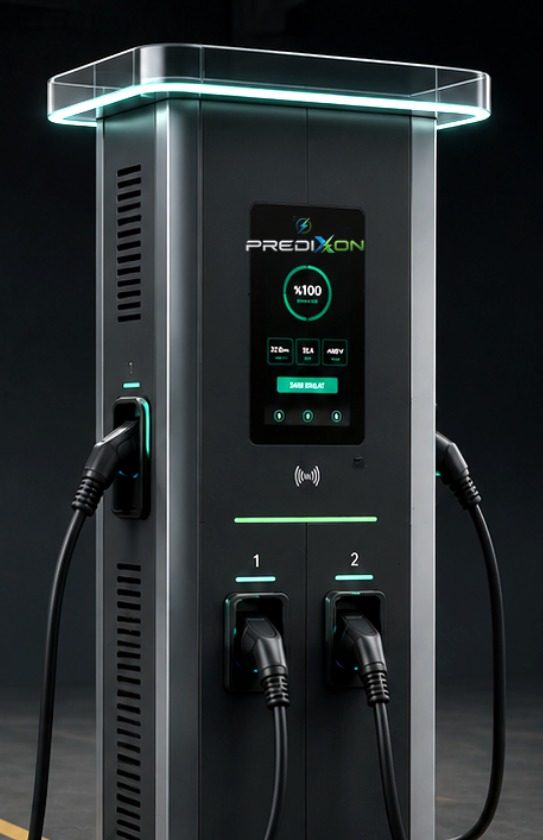
Workplace, Retail & Hospitality
On site: an office, mall or hotel installs a charger to look sustainable, then it quietly becomes a cost centre nobody owns — spots get blocked, billing is a spreadsheet, and one dead unit turns into a one-star review before facilities even hears about it.
The 4-Outlet AC Charging Station serves four vehicles from one footprint with smart power distribution, while ChargeOS turns it into a managed amenity: RFID/QR access, per-session billing, and remote health monitoring mean the facilities team finds out about a fault before the guest does.
4-Outlet AC Station — 4 vehicles at once | Access — RFID · QR
Charging becomes an amenity guests notice — not a facilities headache.
SITE TYPE · 03 OF 6
Fleet & Depot Operations
On site: a logistics, taxi or shuttle fleet needs every vehicle charged and rotated to a schedule. One stalled charger, or one driver at the wrong bay, doesn’t cost a session — it costs a shift.
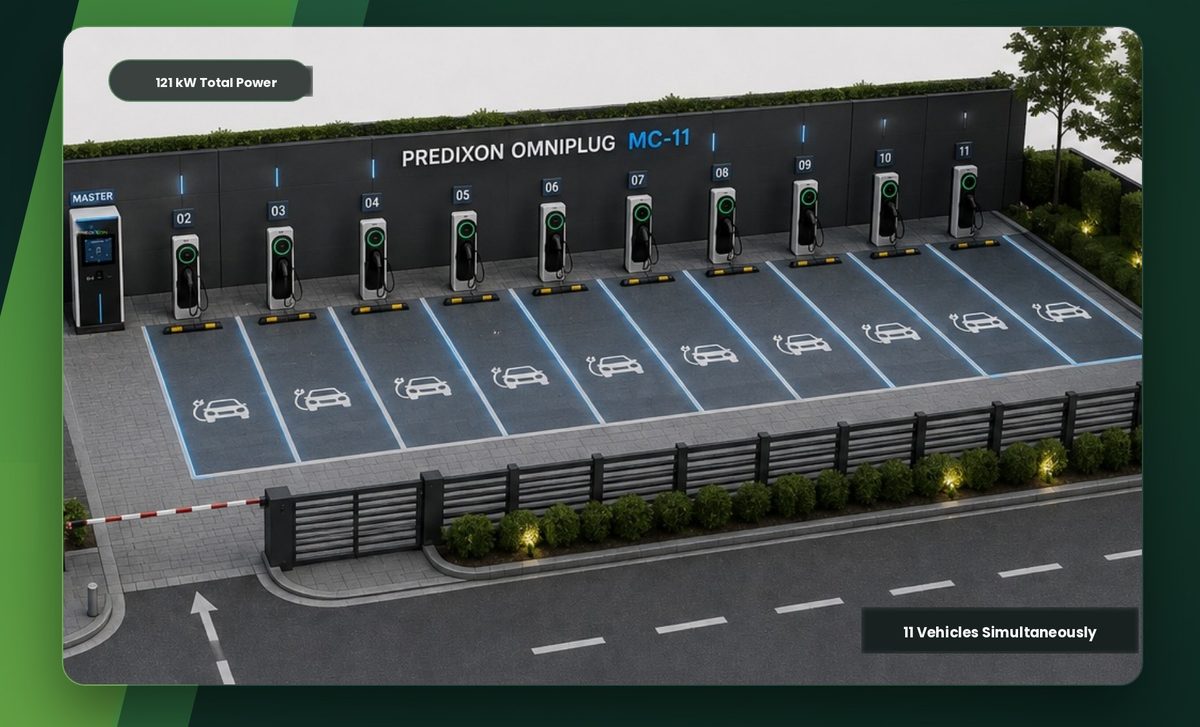
OmniPlug MC-11 charges up to 11 vehicles at once from a single 121 kW installation with dynamic load management, and the wheeled Mobile SC (30 kW, IP54/IK10) covers overflow bays or temporary yards without new civil works. ChargeOS gives the depot manager one live map of every vehicle’s state and every charger’s health score, so scheduling is a plan, not a walk around the yard.
OmniPlug MC-11 — 11 vehicles · 121 kW | Mobile SC — 30 kW portable DC
Know every vehicle’s charge state without leaving the office.
SITE TYPE · 04 OF 6
Highway & Fast-Charging Corridors
On site: a driver stopping mid-trip has one question — how long until I’m back on the road. Every extra minute at the plug is a lost customer for whoever operates that stop.
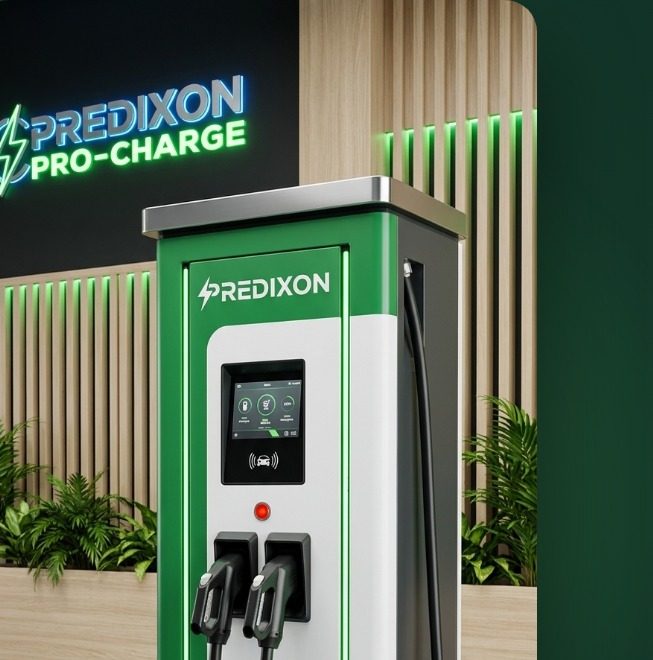
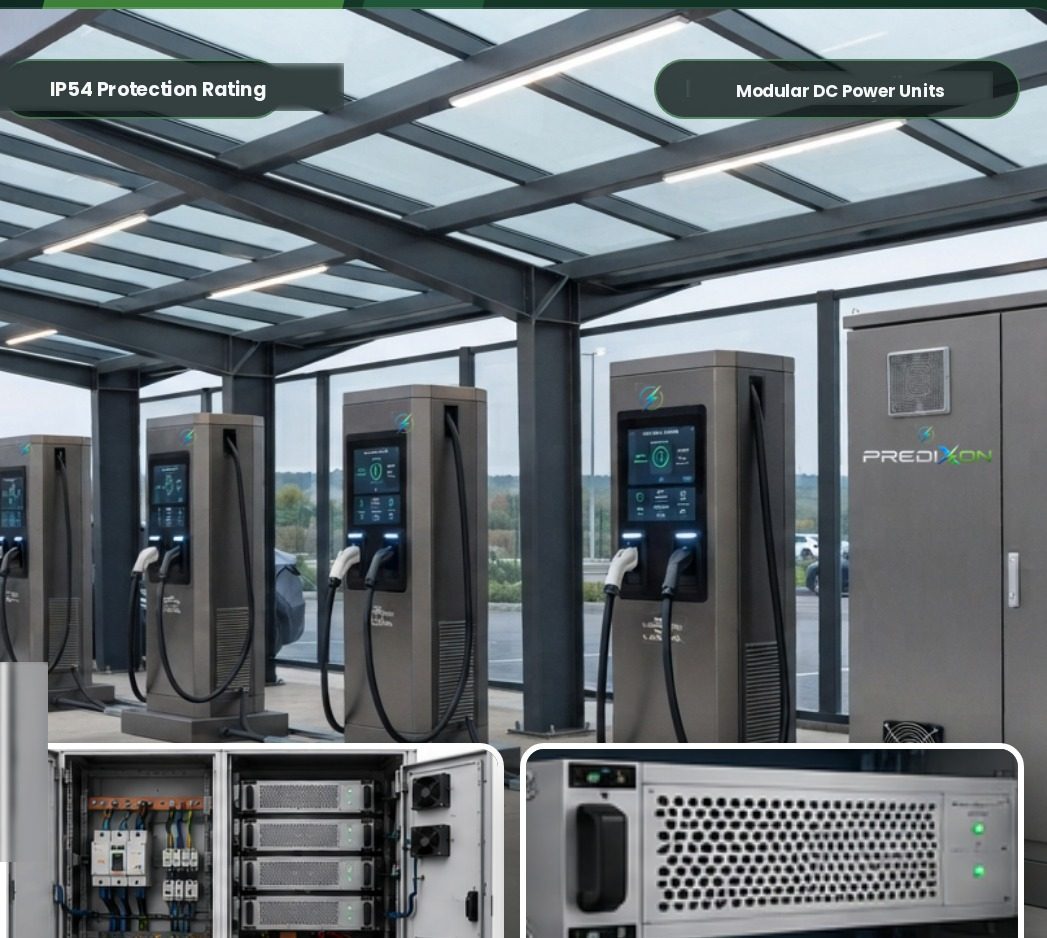
Pro-Charge DC Series delivers modular 120–320 kW through dual CCS2 outputs with smart load sharing, so a station scales from a single 120 kW unit to a five-bay 320 kW corridor stop as traffic grows — adding power modules, not replacing hardware.
Pro-Charge DC Series — 120–320 kW · dual CCS2 | Peak current — 500 A · 96.5%+ eff.
Minutes at the plug, not a lunch break.
SITE TYPE · 05 OF 6
Forecourt & Energy Hub Conversion
On site: a fuel-station or forecourt owner wants to add EV charging, but can’t justify a full high-power build-out on day one — and doesn’t want stranded capacity if demand ramps slower, or faster, than planned.
Power Block & Dispenser separates the power electronics from the dispensing point, so an operator installs shared power infrastructure once and adds dispensers bay by bay as demand justifies it — a forecourt becomes an energy hub in phases, not one large capital bet. (Field-scalable architecture, currently moving from engineering into first customer-facing deployments.)
Power Block & Dispenser — modular AC/DC | Enclosure — IP54 · field-ready
Scale the station to the traffic — not the other way around.
SITE TYPE · 06 OF 6
Public & Municipal Networks
On site: a municipality wants residents to trust public charging — but a scattered network of different vendors’ boxes, inconsistent uptime and no central oversight erodes that trust fast.
Every Predixon unit — wall-mounted, multi-outlet, or fast DC — reports into the same ChargeOS platform, so a network operator manages one fleet of chargers instead of a patchwork of point solutions: one dashboard for uptime, one security model, one auto-healing layer that resolves faults before a resident ever sees an “out of service” sign.
Full hardware range — 3.7–320 kW | ChargeOS — network-wide oversight
One network. One standard of reliability, wherever the charger sits.
ChargeOS CPMS — one operating system for every site above
Hardware decides what a site can do. ChargeOS decides whether anyone has to think about it once it’s installed — the same charge-point management platform runs a single driveway wallbox and a city-wide fast-charging network.
Connection lifecycle: WebSocket connection → Boot notification → Heartbeat (30–60s) → Transactions start/stop → Status reporting
Device health score: 80–100 Healthy · 60–79 Warning · 40–59 Poor · <40 Critical
Fleet management
Real-time monitoring, remote commands and firmware campaigns across every connected charger, regardless of site type.
Auto-healing
0–100 device health scoring with automated issue resolution — many faults close before a site owner ever sees them.
Security
TLS-encrypted OCPP communication, RFID authorization with local + central verification, certificate-based device authentication.
Which site are you standing in?
Tell us the site — home, workplace, depot, corridor, forecourt or network — and we’ll work back from the outcome you need to the hardware and ChargeOS configuration that gets you there.